Application of Prefabricated Substation: Key Uses and Benefits in Modern Power Systems
Application of Prefabricated Substation: Key Uses and Benefits in Modern Power Systems
Explore the application of prefabricated substations in power distribution, renewable energy, data centers, and railway systems. Learn how modular substations cut construction time and costs.
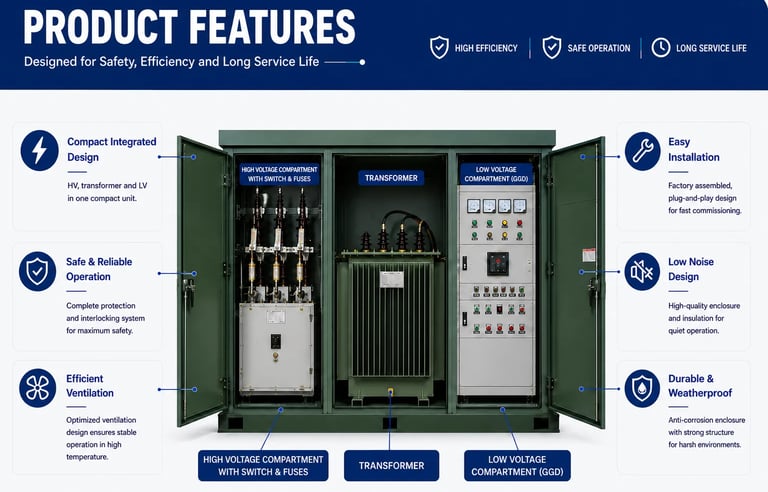
Imagine building a power substation in months instead of years, with factory-quality control and minimal on-site disruption. That is precisely what a prefabricated substation delivers. Also known as modular or box-type substations, these factory-built units integrate transformers, switchgear, and control systems into standardized enclosures. They are shipped to site and assembled like building blocks, dramatically reducing construction timelines and on-site labor.
Traditional substations require extensive civil construction—foundation work, bricklaying, equipment assembly, and on-site wiring—often taking 12 to 24 months to complete. Prefabricated units, by contrast, are manufactured, assembled, and tested in controlled factory conditions before being transported for rapid installation. This approach offers significant advantages across multiple sectors, which we will explore in this guide.
What Makes Prefabricated Substations Stand Out
Before we examine specific applications, it helps to understand what sets these units apart from conventional substations. A prefabricated substation typically includes an enclosure housing power transformers, high-voltage and low-voltage switchgear, interconnections, and auxiliary equipment. The enclosure protects components from environmental factors while ensuring personnel safety.
The International Electrotechnical Commission standard IEC 62271-202 defines these units for rated voltages above 1 kV and up to 52 kV, designed for outdoor installation in publicly accessible locations. They can be walk-in or non-walk-in types, and can be situated at ground level or even partially or completely underground.
This design delivers several key advantages that directly influence its application areas. The prefabricated substation significantly reduces construction time—often by 50–70% compared to traditional methods. It minimizes on-site civil works, reducing dust pollution and environmental disruption. It also offers greater flexibility, allowing easy expansion or relocation as power demands change. These characteristics make them increasingly popular across various industries.
Primary Applications of Prefabricated Substations
Power Distribution and Grid Infrastructure
The largest application for this technology lies in utility power distribution. Prefabricated substation units serve as compact, efficient solutions for stepping down transmission voltage for local distribution. They are particularly valuable in urban areas where space is limited and construction disruption must be minimized.
In China, the first fully modular 500 kV prefabricated substation recently began operations in Zhejiang province. The project was completed in just 14 months—four months faster than conventional construction—with over 80% of components manufactured off-site. The substation serves a high-tech industrial cluster of over 200 enterprises, easing power supply constraints and supporting regional growth.
For urban settings, the compact footprint of box-type substations offers a major advantage. They occupy 3–5 times less land area than traditional substations, saving substantial real estate costs in cities like Shanghai, London, or New York. The reduced land requirement also simplifies permitting and community acceptance.
Renewable Energy Integration
The global shift toward clean energy has created significant demand for prefabricated solutions. Prefabricated substation units are widely used in wind and solar farms, where they step up voltage for grid connection. The modular design allows rapid deployment in remote locations where transporting construction crews and materials proves challenging.
For renewable projects, the prefabricated substation offers another critical advantage: the ability to be transported as a single unit by truck to remote sites. This logistical simplicity makes them the industry standard for renewables. As solar and wind capacity expands globally, this application segment continues to grow rapidly.
Data Centers and AI Computing Infrastructure
The explosive growth of artificial intelligence and cloud computing has created unprecedented demand for reliable, efficient power distribution. Prefabricated substation technology has emerged as a key enabler for this sector.
A notable example is the “AI PowerHouse” developed by Qingdao TGOOD Electric—believed to be the world’s first high-voltage AC/DC prefabricated substation designed specifically for AI computing infrastructure. The facility, measuring approximately 53 meters by 41 meters, integrates high-voltage transformers, gas-insulated switchgear, solid-state transformers, and control systems into modular units manufactured and assembled in factories.
Compared with conventional power facilities serving data centers, this prefabricated solution reduces land use by over 30%, lowers overall project costs by around 20%, and cuts civil engineering expenses by nearly 80%. Construction time drops from 12–18 months to just five months—a reduction of nearly 70%. The system connects directly to 110 kV or 220 kV transmission networks and delivers multiple 800 V DC outputs directly to server rooms, eliminating multiple voltage conversions and reducing electricity costs.
Railway and Traction Systems
Railway electrification presents unique challenges requiring robust, reliable power equipment. Prefabricated substation units in AC and DC electric traction systems must withstand outdoor installation, often in locations with public accessibility.
According to CLC/TS 50711, a European technical specification, prefabricated traction substations can be situated at ground level or partially underground. They typically include traction switchgear, power transformers, electronic power converters, and auxiliary equipment. These units must meet stringent type testing requirements to ensure safety and reliability in demanding railway environments.
Industrial Parks and Commercial Facilities
Manufacturing plants, commercial complexes, and industrial parks increasingly adopt prefabricated substation solutions for their power distribution needs. The rapid installation timeline—often 1–3 days for on-site work—minimizes production disruption.
The parallel processing capability offers a significant advantage. While site preparation (foundation work) proceeds, the prefabricated substation is manufactured, assembled, wired, and tested in the factory. This overlapping timeline drastically reduces the total project cycle from order to energization, mitigating risks of project penalties.
For applications requiring high voltage/low voltage transformer prefabricated substations, the units can incorporate step-up or step-down transformers depending on the installation requirements.
Key Advantages Driving Adoption
Construction Time Reduction
Traditional substations typically require 18 months to 2 years from order to energization. Prefabricated substation projects can complete the entire process—from order placement and production to sea transport, on-site installation, commissioning, and energization—in under six months. A study comparing structural solutions found that prefabricated concrete systems reduced main structure construction from 30 days to just 15 days, and total construction duration from 90 days to 45 days.
Space Efficiency
Box-type units occupy a fraction of the land area required for traditional substations. The compact, enclosed design eliminates the need for equipment spacing and maintenance corridors required in conventional layouts. This space saving proves particularly valuable in urban centers, industrial parks, and commercial districts where land commands premium prices.
Safety and Environmental Benefits
The enclosed design of prefabricated substation units effectively isolates electrical equipment from the outside world, reducing risks from bad weather, pollution, and vandalism. The factory manufacturing process reduces high-above-ground work risks by 50% and minimizes dust pollution at the installation site.
Cost-Effectiveness
While the first investment in prefabricated units may be higher than some traditional options, the total cost comparison often proves favorable. A comparative analysis showed that prefabricated concrete structure costs (210 million yuan) were comparable to cast-in-situ concrete (208 million yuan) but significantly lower than steel structure alternatives (320 million yuan).
Conclusion
The application of prefabricated substation technology spans a wide and growing range of industries. From utility power grids and renewable energy projects to data centers, railway systems, and industrial parks, these modular units deliver faster deployment, lower costs, and greater flexibility than conventional alternatives. The ability to manufacture, assemble, and test components in controlled factory conditions, then transport and install them rapidly on-site, represents a fundamental shift in how power infrastructure is built.
For utilities facing growing electricity demand with tight timelines, for renewable developers building in remote locations, for data center operators needing reliable, efficient power, and for industrial facilities minimizing production disruption, the prefabricated substation offers a compelling solution. Whether you need a high-voltage switchgear prefabricated substation for a grid connection or a high-voltage/low-voltage transformer prefabricated substation for a commercial building, understanding the advantages of modular technology will help you make the right selection for your power distribution needs.
Request a technical quote
Application of Oil-Immersed Transformer: Key Uses in Power Distribution
Application of Oil-Immersed Transformer: Key Uses in Power Distribution
Explore the application of oil-immersed transformer in power grids, industrial plants, and renewable energy. Learn how liquid-filled transformers deliver reliable power distribution.
Request a technical quote
Every time you flip a switch, plug in a device, or start a machine, you rely on a complex network of equipment that delivers electricity from power plants to your location. At the heart of this network sits a critical component: the oil-immersed transformer. These liquid-filled units step voltage up for efficient long-distance transmission or step it down for safe local use. Their robust design, superior cooling, and proven reliability make them the preferred choice for high-capacity applications worldwide. Let us explore where and why these essential devices find their most common applications.
What Makes Oil-Immersed Transformers Stand Out
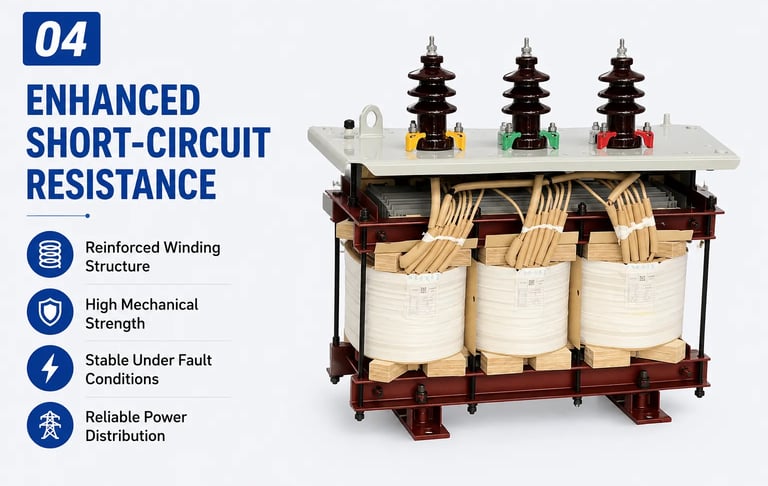
Before we examine specific applications, it helps to understand what sets these transformers apart from alternatives. An oil-immersed transformer uses mineral oil or synthetic liquid as both an insulating medium and a cooling agent. The oil fills the tank containing the core and windings, providing two critical functions. First, it insulates the live components, preventing electrical breakdown. Second, it transfers heat away from the core and windings to the tank walls, where it dissipates into the surrounding air.
This design offers several advantages that directly influence its application areas. These units handle higher power ratings than dry-type alternatives. They also offer better overload capacity and longer service life. And they operate more quietly than air-cooled units. These characteristics make them the go-to choice for demanding installations.
Primary Applications of Oil-Immersed Transformers
Power Generation and Transmission Substations
The largest application for this technology lies in power generation and transmission. Oil-immersed transformer units at power plants step up generator output voltage from medium levels (typically 11–33 kV) to transmission levels (110 kV, 220 kV, or even higher). This voltage increase reduces current, minimizing energy loss during long-distance transmission.
At transmission substations, step-down units perform the opposite function, reducing voltage for regional distribution. These installations often feature multiple large-capacity power transformers connected in parallel, providing redundancy and allowing maintenance without interrupting service. The cooling method used in these units—typically oil-forced air-forced (OFAF) or oil-forced water-forced (OFWF)—enables them to handle the massive heat loads generated during continuous full-load operation.
Industrial Facilities and Heavy Industry
Manufacturing plants, refineries, and mining operations rely heavily on these transformers. In an industrial setting, the oil-immersed transformer receives primary voltage from the utility and steps it down to a distribution voltage suitable for plant equipment. This secondary voltage typically ranges from 415V to 11kV, depending on the facility’s requirements.
Heavy industries like steel making, cement production, and chemical processing demand enormous amounts of power. A single liquid-filled transformer in such a facility may handle tens of megavolt-amperes (MVA). These units must withstand harsh environmental conditions, including dust, heat, and corrosive atmospheres. Their sealed construction and robust tank design provide the durability needed for these challenging environments.
Renewable Energy Integration
The global shift toward renewable energy has created new applications for oil-immersed transformer technology. Wind farms typically collect power from multiple turbines at medium voltage (33 kV) and step it up to transmission voltage (110 kV or higher) for grid connection. Solar photovoltaic plants use similar arrangements, with step-up units housed near the inverter stations.
In remote renewable installations, pad-mounted transformers offer a space-efficient solution. These units sit on concrete pads at ground level, enclosed in weather-resistant cabinets. Their compact footprint and secure enclosure make them suitable for locations where overhead lines prove impractical.
Railway and Transportation Infrastructure
Modern railway systems depend on reliable power distribution. Oil-immersed transformer units in railway substations convert utility power to the voltages required for traction systems. Electrified railways typically use voltages of 25 kV AC or 1.5 kV DC, depending on the system design.
These transformers face unique demands. They must handle frequent overloads as trains accelerate and decelerate. They must withstand vibration and shock from passing trains. And they must fit within the confined spaces of wayside substations. Manufacturers address these requirements with reinforced tank designs and specialized tap changers that regulate voltage under varying load conditions.
Commercial Buildings and Urban Infrastructure
Large commercial complexes, hospitals, and institutional facilities often use oil-immersed transformer units for their primary power distribution. These buildings typically take utility power at medium voltage and step it down to the low voltage required for lighting, HVAC, and equipment. The units may be installed in dedicated transformer rooms or outdoor enclosures.
Urban applications increasingly use distribution transformers that combine compact footprint with efficient cooling. These units often include tank designs that minimize oil volume while maintaining adequate cooling surface. Some also incorporate special features like low-noise operation, making them suitable for installations near residential or office areas.
Mining and Offshore Operations
Mining operations present some of the most demanding conditions for electrical equipment. Oil-immersed transformer units in mines must withstand dust, moisture, vibration, and frequently moving conveyors. They also operate in potentially explosive atmospheres, requiring specialized designs that prevent arc ignition.
Offshore platforms face similar challenges. The marine environment brings saltwater corrosion, constant motion, and limited space. Transformers for these installations require special tank coatings, reinforced internal bracing, and often nitrogen blanketing to maintain oil quality.
Key Selection Parameters for Oil-Immersed Transformers
Choosing the right unit for your application requires attention to several critical specifications. Transformer efficiency directly affects your operating costs. Higher efficiency units cost more initially but save money over their service life through reduced energy losses. Look for units meeting the latest efficiency standards for your region.
Transformer cooling method determines how much load the unit can handle. Common classifications include ONAN (oil natural, air natural), ONAF (oil natural, air forced), and OFAF (oil forced, air forced). ONAN cooling works for moderate loads. ONAF uses fans to increase cooling capacity. OFAF provides the highest capacity through both oil pumps and fans.
Transformer capacity (rated in kVA or MVA) must match your load requirements. Consider both current and future needs. A unit operating near its full capacity continuously may have a shortened service life. Most engineers size units to operate at 60–80 percent of rated capacity under normal conditions.
Transformer protection features safeguard the equipment against faults. Essential features include Buchholz relays for detecting gas accumulation, pressure relief devices for overpressure protection, and temperature monitors for overheating detection. Oil testing procedures should also be considered, as regular oil analysis is essential for monitoring transformer health and detecting potential issues like moisture ingress or degradation.
Conclusion
The application of oil-immersed transformer spans a wide range of critical infrastructure. From massive transmission substations that power entire cities to compact pad-mounted units serving remote wind farms, these liquid-filled workhorses deliver reliable voltage transformation across the power grid. Their ability to handle high loads, withstand harsh conditions, and operate for decades with proper maintenance makes them indispensable to modern electrical systems.
When you need a power transformer for a new installation or a distribution transformer for an upgrade, consider the specific requirements of your application. Match the capacity, cooling method, efficiency rating, and protection features to your operational needs. With the right selection and regular oil testing, your oil-immersed transformer will provide dependable service for decades to come.
Application of Low Voltage Switchgear: Essential Uses in Power Distribution Systems
Application of Low Voltage Switchgear: Essential Uses in Power Distribution Systems
Explore the application of low voltage switchgear in industrial facilities, commercial buildings, and critical power systems. Learn how LV switchgear protects and controls electrical distribution.
Request a technical quote
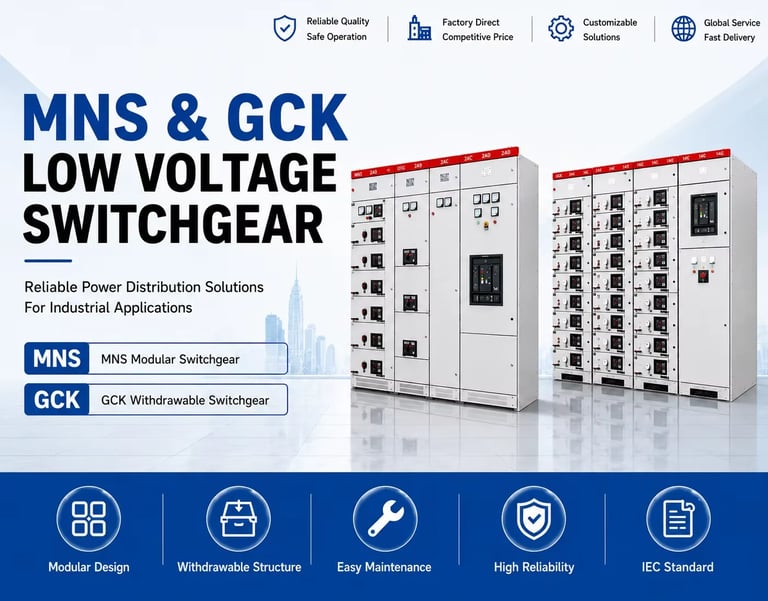
Think about the electrical systems that power your workplace. Behind the panels and enclosures, one crucial component quietly manages the flow of electricity. Low voltage switchgear (rated up to 1kV AC) serves as the backbone of electrical distribution in industrial plants, commercial buildings, and infrastructure projects. These assemblies, consisting of circuit breakers, switches, relays, and busbars, perform three essential functions: they protect circuits from overloads and short circuits, isolate equipment for safe maintenance, and enable local or remote switching control .
In this guide, we will explore the major applications where this essential equipment proves indispensable across multiple sectors.
Why Low Voltage Switchgear Matters
Understanding the role of these systems helps appreciate their widespread use. Low voltage switchgear provides electrical protection against thermal and mechanical stresses caused by short-circuit currents . Without this protection, a fault would send a heavy current through the equipment, damaging components and disrupting operations .
Beyond protection, these systems also enable system isolation, allowing technicians to work on specific circuits without shutting down entire facilities . They also support efficient energy management by optimizing power distribution and reducing energy loss . With the rise of AI and cloud computing, demand for highly reliable power distribution systems has increased significantly, making the proper application of this technology more important than ever .
Primary Applications of Low Voltage Switchgear
Industrial Facilities
The industrial sector represents one of the largest application areas for this technology. Low voltage switchgear powers heavy machinery, motor control centers, manufacturing processes, and production lines in factories, refineries, and mining operations .
In these demanding environments, the equipment must withstand high current levels and frequent operation. Common applications in this sector include power distribution to pumps, cranes, fans, and compressors . It also supports process controls in industries such as petrochemical, semiconductor, pharmaceutical, and steel manufacturing . For facilities that cannot afford downtime, such as chemical plants, the switchgear’s ability to detect and isolate faults rapidly is critical.
Commercial Buildings and Infrastructure
From office towers to shopping malls, low voltage switchgear ensures safe power distribution throughout large buildings. It supports lighting systems, HVAC (heating, ventilation, and air conditioning), elevators, and office equipment .
Modern commercial installations increasingly use modular switchgear designs that allow easy expansion as power demands grow . The enclosure protection ratings (such as IP3X or IP4X) safeguard internal components from dust and accidental contact, ensuring reliable operation in both indoor and outdoor settings .
Data Centers and IT Facilities
The digital economy depends on uninterrupted power, and data centers are a prime example. Low voltage switchgear supplies critical infrastructure for servers, storage, and networking equipment in these facilities . With servers requiring stable, clean power, the switchgear must respond instantly to faults without disrupting operations.
Advanced safety features, such as zone-selective interlocking (ZSI) and arc-flash reduction systems, help minimize fault damage and improve operator safety in data center environments .
Healthcare Facilities
Hospitals and medical facilities rely on this technology for life-support systems, diagnostic equipment, and backup power systems. Low voltage switchgear ensures uninterrupted power to operating rooms, intensive care units, and other critical areas . The ability to isolate faulty sections and maintain continuous power to essential equipment makes it indispensable in healthcare applications.
Renewable Energy Systems
As the world shifts to cleaner energy, low voltage switchgear plays a growing role in integrating solar and wind power into the grid . In photovoltaic power plants and wind farms, it handles the distribution and protection of generated electricity before it steps up to higher voltages for transmission. This segment is expected to experience significant growth as renewable projects continue to expand.
Critical Power and Standby Systems
Low voltage switchgear is essential for standby power systems that activate during primary power failures. Applications include fire safety systems, telecommunication facilities, and industrial processes where outages cause significant disruption . Paralleling systems synchronize multiple power sources (such as generators) to share loads and ensure redundancy, while load shedding systems prioritize and reduce electricity usage during peak demand periods .
Key Selection Parameters for Low Voltage Switchgear
Choosing the right equipment for your application requires attention to several critical specifications .
Rated Voltage and Current
The rated voltage of low-voltage switchgear is typically 400V or 690V, matching the operating requirements of most electrical equipment . The rated current must match the connected load capacity, ensuring the switchgear can withstand the maximum load current without damage from overload .
Short-Circuit Withstand Capacity
This parameter, expressed in kA (kiloamperes), indicates the maximum short-circuit current the assembly can safely withstand. For example, if your system’s fault current is 65 kA, the switchgear must be rated accordingly—the assembly’s rating must match the lowest rated breaker used in it . This rating determines the minimum bus bracing required to prevent bending and damage during a short-circuit event .
Protection Level (IP Rating)
The IP (Ingress Protection) rating indicates the enclosure’s resistance to dust and moisture. For example, IP3X-rated enclosures block dust ingress and provide protection against accidental touching . Choose the appropriate level based on your installation environment—indoor, outdoor, or harsh conditions.
Installation Environment
Consider whether your application requires indoor-type or outdoor-type switchgear. Enclosed switchgear for indoor use typically arrives factory-finished, requiring minimal installation work . Outdoor units need weather-resistant enclosures to withstand temperature fluctuations, humidity, and moisture.
Safety Protection Functions
Modern low voltage switchgear integrates multiple safety features, including overload protection, short-circuit protection, and earth leakage detection . Arc-resistant designs and reliable interlocks further prevent unsafe operations and protect personnel .
Conclusion
The application of low voltage switchgear spans virtually every sector that depends on reliable electrical power distribution. From heavy industrial facilities and commercial buildings to data centers and renewable energy projects, these systems provide the protection, isolation, and control that modern electrical networks require . When selecting the right equipment, consider key parameters such as rated voltage and current, short-circuit withstand capacity, protection level, and safety features. By matching the technology to your specific installation environment and operational needs, you can ensure safe, efficient, and reliable power distribution for decades to come.
Application of High Voltage Switchgear: Key Uses in Power Systems
Application of High Voltage Switchgear: Key Uses in Power Systems
Explore the application of high voltage switchgear in transmission substations, renewable energy integration, and industrial facilities. Learn how GIS and AIS protect critical power infrastructure.
Request a technical quote
Imagine the complex network that delivers electricity from massive power plants to your home or business. Along this journey, voltage must be stepped up for efficient long-distance transmission and stepped down for safe local distribution. High voltage switchgear serves as the critical control and protection equipment at every junction of this journey. These systems include circuit breakers, disconnectors, and protective relays that monitor, isolate, and safely interrupt electrical faults, preventing damage to equipment and ensuring grid stability .
In this guide, we will explore the major applications where this essential equipment proves indispensable.
Why High Voltage Switchgear Matters
Understanding the role of these systems helps appreciate their widespread use. High voltage switchgear (typically rated above 36kV AC) is essential for several key reasons . It enhances efficiency by allowing power transmission at high voltages, which reduces current and minimizes energy loss over long distances. It provides critical protection by isolating faulty sections of the network to prevent widespread outages. And it ensures safety through reliable switching and fault interruption, protecting both equipment and personnel.
These capabilities directly drive its deployment across multiple sectors .
Primary Applications of High Voltage Switchgear
Transmission and Distribution Substations
The largest application of this technology lies in transmission and distribution substations, which accounted for approximately 58% of the market in 2025 . Here, the equipment manages the bulk transfer of electricity across regions and handles voltage transformation between different grid levels .
In these settings, two main technologies compete. Air-insulated switchgear (AIS) is a cost-effective solution with easy maintenance access, making it suitable for locations with ample space . Gas-insulated switchgear (GIS), on the other hand, is the preferred choice in space-constrained environments like urban substations and indoor installations, offering a compact footprint with excellent environmental sealing .
Renewable Energy Integration
The rapid deployment of solar and wind projects has created significant demand for these systems, with this segment projected to grow at over 10% annually . A typical wind or solar farm needs high voltage switchgear to step up voltage and connect to the transmission grid safely.
Gas-insulated switchgear (GIS) is particularly well-suited for offshore wind connections, where its compact design and resistance to harsh conditions prove invaluable . Hybrid switchgear solutions, which combine the compactness of GIS with the accessibility of AIS, are increasingly used in renewable and industrial grid connections .
Industrial and Commercial Facilities
Large industrial operations, including manufacturing plants, data centers, and mining facilities, rely on high-voltage systems for reliable power distribution . At the point where utility transmission lines enter a facility, high voltage switchgear steps down the voltage for internal distribution, protecting sensitive equipment from faults.
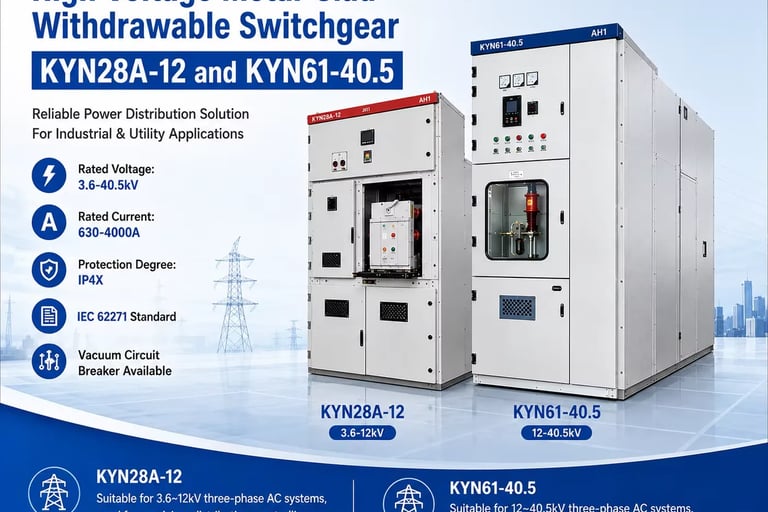
For indoor industrial settings, metal-clad switchgear (type K) offers the highest safety standards with all primary components in separate, grounded compartments . These systems often incorporate protection relays for overcurrent and earth fault protection, ensuring operational safety .
Urban Infrastructure and Railways
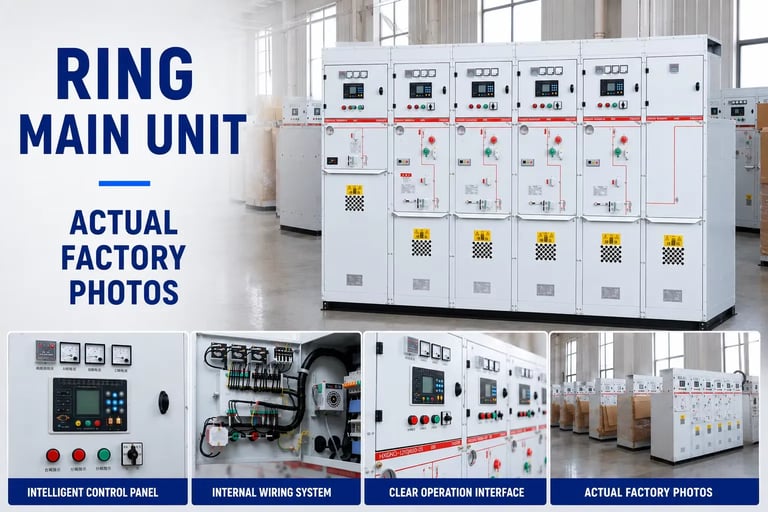
Growing cities and modern transportation networks also depend on this technology . High voltage switchgear is used in urban power distribution for residential and commercial areas, especially in ring main units (RMUs) for cable ring networks . Additionally, it powers rail and transit systems, ensuring safe and reliable traction power .
Selecting the Right Switchgear for Your Application
Choosing the right system involves several critical factors .
Voltage Level and Capacity
The most fundamental criterion is system voltage. High voltage switchgear (above 36kV) is typically reserved for transmission and regional substations, while medium voltage systems (1kV to 36kV) are used for distribution networks . Matching the equipment’s rated voltage and short-circuit withstand level to your grid’s specifications is essential for reliable operation .
Installation Environment
As noted earlier, indoor-type (N) switchgear is designed for controlled building environments, while outdoor-type (W) gear requires reinforced enclosures to withstand weather, moisture, and temperature fluctuations . Choose GIS for space-limited urban installations and AIS for locations with ample space and a preference for easy maintenance access .
Safety and Compliance
Ensure your chosen equipment meets international standards, such as the IEC 62271 series, which governs performance, safety, and durability . Look for essential safety features like arc-proof designs and reliable interlocks to prevent unsafe operations .
Conclusion
The application of high voltage switchgear spans the entire electrical grid, from large transmission substations to urban distribution networks and industrial facilities. Whether you need gas-insulated switchgear (GIS) for a compact urban substation, air-insulated switchgear (AIS) for a cost-effective outdoor installation, or a hybrid switchgear solution for a grid connection, selecting the right equipment is a critical decision that impacts safety, reliability, and long-term operational efficiency . By carefully matching the technology to your specific voltage requirements, installation environment, and operational needs, you can ensure a resilient and secure power supply for decades to come .
Application of Dry-Type Transformers: Key Uses in Modern Power Systems
Application of Dry-Type Transformers: Key Uses in Modern Power Systems
Explore the application of dry-type transformers in data centers, commercial buildings, and industrial facilities. Learn why these air-cooled units are the safe choice for indoor power distribution.
Imagine walking into a high-rise office building, a busy hospital, or a massive data center. Behind the walls, quietly converting voltage and ensuring safe power distribution, you will often find a dry-type transformer. Unlike traditional oil-filled units, these transformers use air or solid resin for cooling and insulation, eliminating the risk of oil leaks and fires . Their unique safety profile makes them the preferred choice wherever fire safety, environmental protection, and indoor installation are top priorities .
In this article, we’ll explore the most common applications of this essential electrical equipment and explain why industries choose them for critical power needs.
What Makes Dry-Type Transformers Unique?
To understand their applications, it helps to first appreciate what sets these units apart. A dry-type transformer relies on air circulation (natural or forced) and solid insulation materials like cast resin to dissipate heat and isolate windings . This design offers several key benefits:
-
Fire and Environmental Safety: They are self-extinguishing and release no toxic gases under arcing, making them safe for indoor installation in occupied spaces .
-
Low Maintenance: There is no oil to test, filter, or replace, significantly reducing operational costs over time .
-
Eco-Friendly: With no risk of oil spills, they are an environmentally responsible choice for sensitive locations .
These advantages directly drive their widespread use across multiple sectors.
Primary Applications of Dry-Type Transformers
Commercial and Public Buildings
One of the most common applications is in commercial and public infrastructure . Here, they power lighting, HVAC systems, and general electrical distribution in office buildings, shopping malls, schools, and hospitals .
In hospitals, the fire-resistant, low-maintenance nature of these units is critical. They ensure reliable power for life-saving medical equipment without introducing the fire or environmental hazards associated with liquid-filled alternatives . Similarly, in high-rise residential or office buildings, they are often installed on upper floors or in basements where oil containment would be impractical .
Industrial Facilities
Manufacturing plants and processing sites also benefit significantly from this technology . In dusty environments like cement factories or textile mills, encapsulated designs protect the windings from contamination, ensuring long service life .
For heavy machinery and production lines, selecting the correct kVA capacity is essential. Engineers typically size these units so they operate at 60–80 percent of rated capacity under normal conditions, leaving room for temporary demand spikes or future system expansion .
Data Centers and IT Infrastructure
The digital economy depends on reliable power, and data centers are a prime example of where this technology excels . In these high-density environments, the primary concern is the safety of critical IT loads. A dry-type transformer, often integrated into power distribution units (PDUs), provides reliable voltage transformation without the risk of a fluid leak that could damage millions of dollars worth of servers .
Renewable Energy Projects
As the world shifts to cleaner energy, these transformers are playing a growing role in solar and wind installations . For photovoltaic power plants, they are used to step up voltage for grid connection. Their ability to operate safely in outdoor conditions and their reduced environmental impact (no oil spills) align perfectly with the sustainability goals of renewable projects .
Oil & Gas and Government Infrastructure
For critical infrastructure like refineries or military installations, where safety and compliance are paramount, these units are the preferred choice. In the oil and gas industry, they provide fire-safe voltage transformation in areas where liquid containment is not practical . Government and institutional facilities choose them for their long service life and ability to meet strict documentation and environmental compliance requirements .
Key Selection Factors for Optimal Application
Choosing the right unit for your specific application involves more than just matching voltage and kVA ratings . For a successful long-term installation, consider the following technical parameters:
Temperature Rise and Insulation Class
The temperature rise rating (e.g., 80°C, 115°C, or 150°C) determines how hot the unit can get under full load. A lower temperature rise extends insulation life and improves reliability . The insulation class (e.g., Class F or H) defines the maximum safe operating temperature for the winding insulation .
Installation Environment
Proper ventilation is critical because these transformers rely on air for cooling . Ensure the installation location has adequate airflow and is protected from excessive dust and moisture . For demanding industrial settings, consider an encapsulated (sealed) design for complete protection against contaminants .
Load Characteristics
Understanding your load factor is key to avoiding thermal stress. Load factor refers to the percentage of rated capacity used during normal operation. Continuous operation at very high loads accelerates insulation aging, so it is generally recommended to size the transformer so it operates at 60–80 percent of its rated capacity under typical conditions .
Conclusion
The application of dry-type transformers spans a wide and growing range of industries, driven by their unparalleled safety, environmental benefits, and low maintenance requirements. From ensuring uninterrupted power in data centers and commercial buildings to supporting heavy loads in industrial facilities and powering the future in renewable energy projects, these air-cooled units have proven their value .
When selecting the right unit, it’s essential to consider not just the power rating but also the specific installation environment, temperature rise limits, and load profile . By doing so, you can ensure reliable, efficient, and safe power distribution for decades to come .
Request a technical quote